Mini golf tips help beginners do three things quickly: control speed, choose simple paths, and avoid the mistakes that turn an easy second putt into a five-stroke hole. You do not need a golf swing to play well. You need a steady setup, a clear target, and a plan for each obstacle.
If you want the basic rules first, start with mini golf rules and scoring. If you already know how strokes work, use this guide before your next round and then browse mini golf courses when you are ready to pick a place to play.
Quick mini golf tips before you start
- Pick a putter that lets your arms hang naturally. If the putter is too long or too short, speed control gets harder.
- Stand behind the ball before each shot and trace the path to the cup with your eyes.
- Aim for a landing spot, wall, or curve, not only the hole.
- Hit most first putts firm enough to reach the cup area, but not so hard that they bounce back across the hole.
- Use the side rails on purpose. Many mini golf holes are built for bank shots.
- Keep your wrists quiet. Let your shoulders move the putter back and through.
- Agree on a stroke limit before the round if your group includes kids, beginners, or a crowded course.
- Read posted house rules. They matter more than any general guide.
Mini golf tips for beginners that matter most
The best beginner strategy is simple: give yourself easy second putts. Hole-in-one attempts are fun, but a steady two or three usually beats a risky shot that bounces into a bad position.
Choose the right putter
Most venues provide several putter lengths. Choose one that lets you stand comfortably with a slight bend in your elbows. The putter head should sit flat on the turf without forcing you to hunch over.
Kids should use shorter putters when available. A putter that is too long makes them lift the toe, twist the face, and swing around their body. For younger children, the goal is clean contact and a fun pace, not perfect technique. The mini golf with toddlers guide has more advice for very young players.
Read the hole from tee to cup
Before you putt, step behind the ball and look at the full hole. Find the cup, the main slope, the safest wall, and the trouble spots. Trouble usually means steep angles, raised lips, water edges, corners that stop the ball, or gaps where a missed shot rolls far away.
Ask one question: where do I want the ball to stop if it does not go in? That answer often gives you the smartest aim point.
Control speed before perfect aim
Speed control is the biggest beginner skill. On a flat hole, a good first putt usually passes the cup by 1 to 2 feet if it misses. On a downhill hole, the right speed may barely reach the cup. On thick turf or an uphill ramp, you may need more pace.
Use a short practice motion next to the ball, then make the real stroke with the same rhythm. Avoid a long backswing with a sudden jab. That makes distance unpredictable.
Use banks and walls on purpose
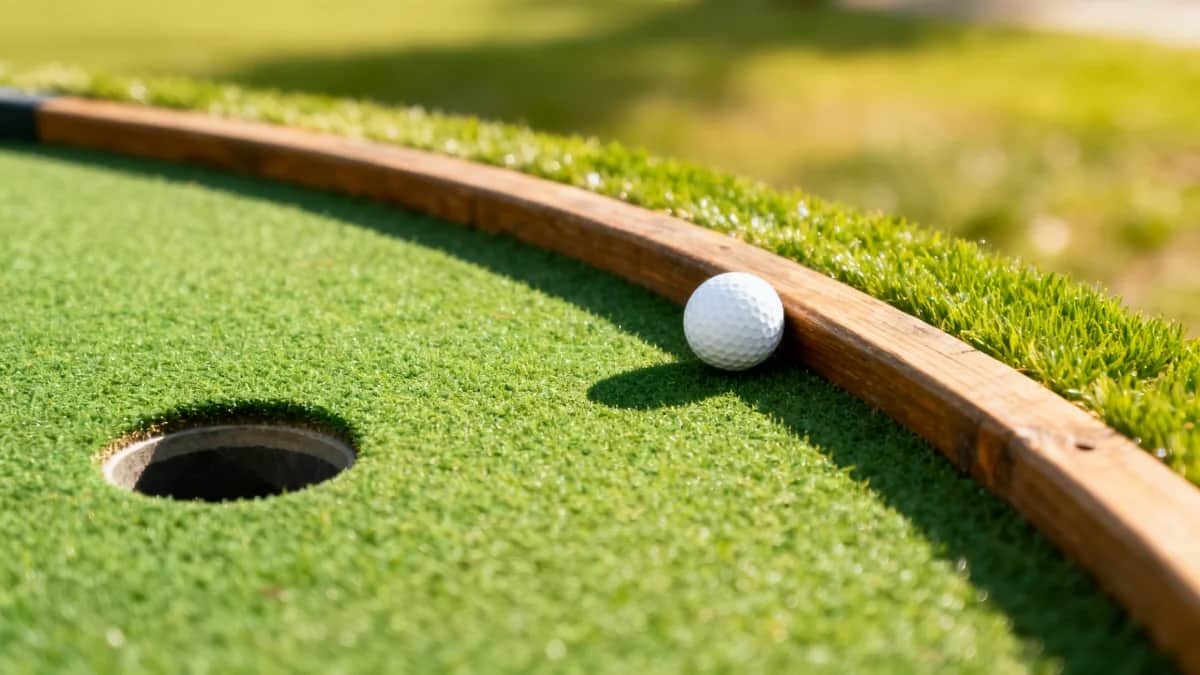
Many mini golf holes are designed so a direct shot is not the best shot. If a wall creates a clean angle to the cup, use it. Pick a spot on the wall, not the hole, and roll the ball toward that spot.
Bank shots work best when the ball reaches the wall at a controlled speed. Too soft and the ball dies before it turns. Too hard and it can rebound past the target.
How to play common mini golf holes
Different holes reward different decisions. This table gives you a quick plan before you putt.
| Hole type | Smart beginner play | What to avoid |
|---|---|---|
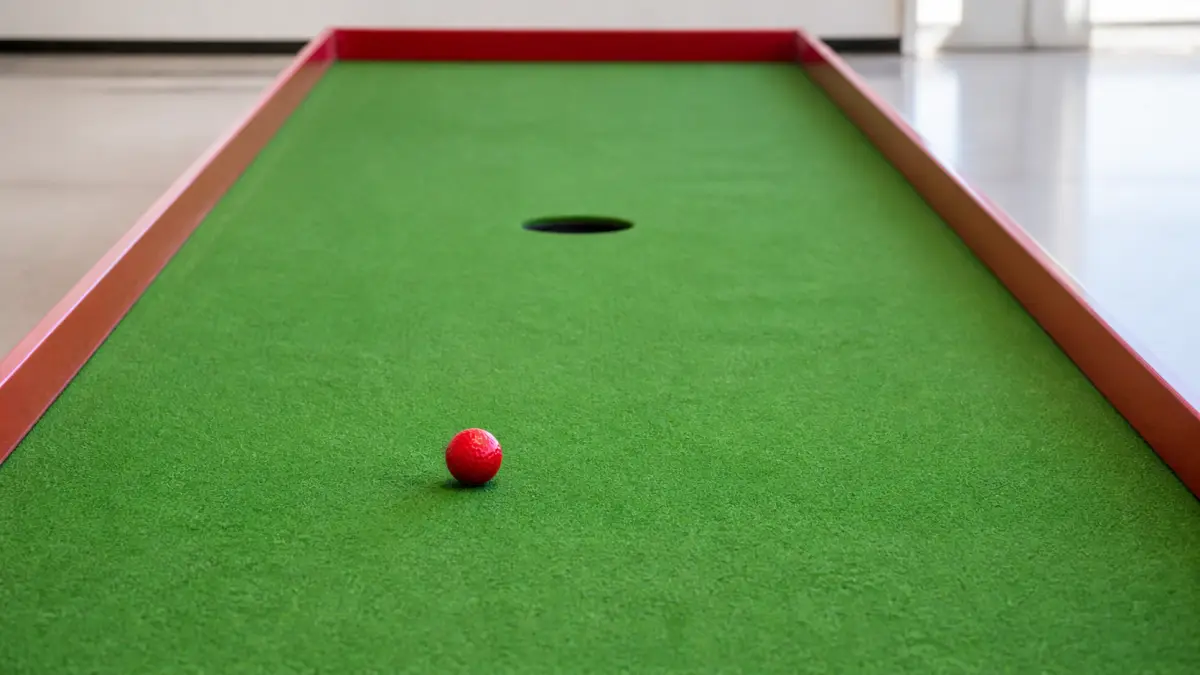
| Straight flat hole | Aim at the center of the cup and focus on smooth speed | Hitting hard because the shot looks easy |
| Bank-shot hole | Pick a specific spot on the rail and roll through it | Aiming vaguely at the wall |
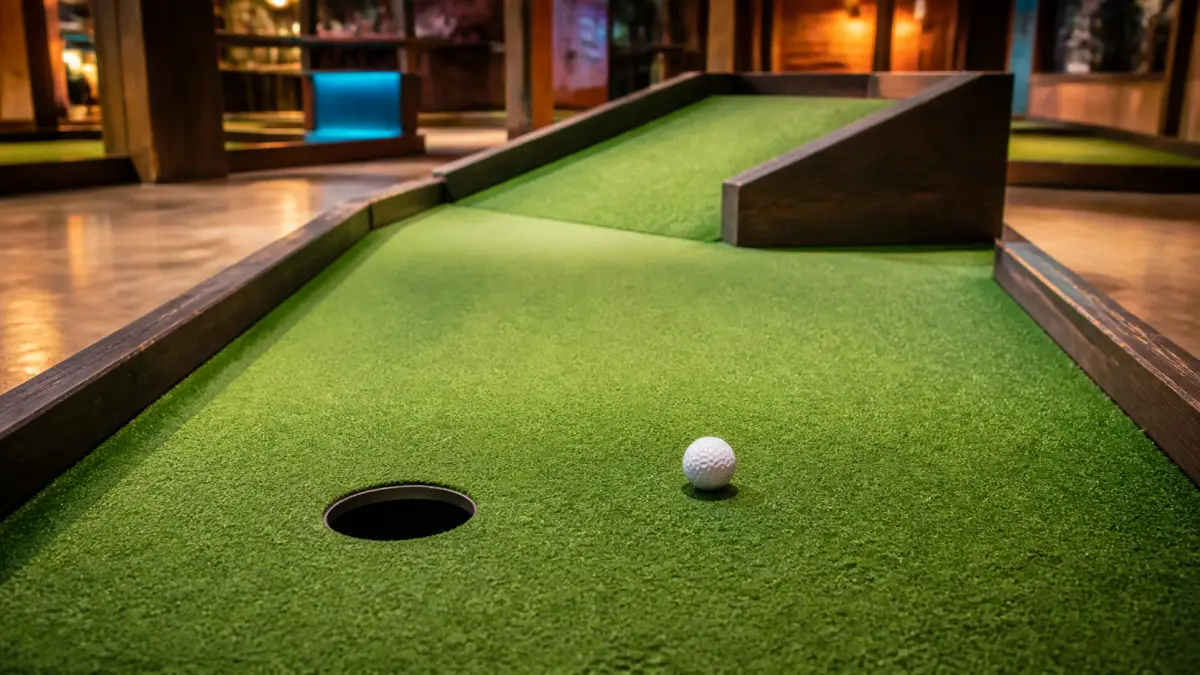
| Ramp hole | Use enough speed to climb the ramp cleanly | Half-speed shots that roll back to your feet |
| Tunnel or bridge | Aim for the middle of the opening | Trying to curve the ball through a narrow gap |
| Sloped green | Let the ball fall toward the cup from the high side | Aiming straight at the cup on a side slope |
| Risk-reward split path | Take the safe path unless the reward is obvious | Choosing the trick path just because it looks fun |
If you are choosing between a short round and a full round, compare 9 holes and 18 holes of mini golf. A 9-hole round is easier for kids, first dates, and tight schedules. An 18-hole round feels more complete when mini golf is the main plan.
How to keep score without slowing down
Every time a player hits the ball, count one stroke. Add each hole score at the end, and the lowest total wins. A mini golf scorecard makes this easy, but casual groups do not have to keep score if it makes the outing less fun.
For beginners, use a 5 or 6 stroke maximum per hole. Once a player reaches the limit, mark that score and move on. This keeps the round moving and prevents one difficult obstacle from ruining the game.
Good scorekeeping habits:
- Write scores after everyone finishes the hole, not while another player is putting.
- Keep the pencil and scorecard with one person so they do not get lost.
- Agree on ties before you start. Shared wins are fine for casual rounds.
- If a ball leaves the hole area, follow the posted venue rule.
Pace matters on busy courses. If your group is taking photos, helping kids, or discussing scores, step away from the active hole so the next group can play. The mini golf etiquette guide covers turn order, safety, photos, food, and crowded-course behavior.
Tips for kids, dates, and groups
The right strategy depends on who is playing. A competitive adult group, a birthday party, and a first date should not use the exact same pace or scoring style.
| Group | Best approach | Useful link |
|---|---|---|
| Young kids | Use short putters, short rounds, simple targets, and a stroke limit | Mini golf with toddlers |
| First dates | Keep the round light, avoid coaching too much, and choose a venue with an easy next stop | Mini golf first date |
| Larger groups | Split into smaller groups, use a scorekeeper, and confirm booking rules | Mini golf group planning |
| Weather-sensitive plans | Choose indoor or covered venues when rain, heat, or cold could affect the round | Indoor mini golf |
If your group wants more structure than a normal scorecard, try a simple format from these mini golf games and challenges. Team best ball, mystery bonus holes, and closest-to-the-cup points can make a casual round more fun without turning every hole into a serious competition.
Most 18-hole rounds take 45 to 90 minutes for a small group, but crowds and larger groups can stretch that. Check how long mini golf takes if you are planning around dinner, a party room, or another activity.
Common beginner mistakes to avoid
Swinging too hard is the mistake that causes the most extra strokes. Mini golf rewards pace, not power. A hard shot that misses can bounce off the back wall, cross the green, and leave a longer putt than the one you started with.
Another mistake is aiming only at the cup. On curved, sloped, or banked holes, the cup may not be the real target. Your target might be a side wall, a high-side patch of turf, or the entrance to a ramp.
Beginners also tend to change rules mid-round. Decide before you start whether you are using a stroke limit, how to handle out-of-bounds balls, and whether you are playing strictly or casually. This avoids awkward arguments later.
Finally, avoid giving constant advice unless someone asks. A quick tip is helpful. A full putting lesson on every hole usually slows the group and makes casual players tense.
Where to play your next round
Once you know the basics, course choice matters. A smooth outdoor course is great for learning pace and bank shots. A themed indoor course adds obstacles and weather protection. A bar-style venue is better for a social night than for serious scorekeeping.
Use the course directory to compare local options, or browse mini golf by location if you are planning around a city or trip. If price matters, check mini golf coupons and deals before buying tickets. If you want a ranked starting point, check the best mini golf courses pages.
If your group is new, choose a course that looks clear in photos, has enough space between holes, and does not rely only on narrow trick shots. A beginner-friendly course still has obstacles, but the path should be easy to understand before you hit the ball.
Mini golf tips FAQ
What is the best mini golf tip for beginners?
The best mini golf tip for beginners is to control speed before aim. Try to roll the first putt close enough for an easy second putt, even if it misses. A calm two-putt hole usually beats a hard hole-in-one attempt that rebounds into a corner or hazard.
How do you aim in mini golf?
Stand behind the ball, choose the path you want, then pick a target spot on the turf or wall. On straight holes that spot may be the cup. On bank shots, ramps, and slopes, aim at the place that sends the ball toward the cup at a controlled speed.
How hard should you hit a mini golf ball?
On a flat shot, hit the ball hard enough to pass the cup by about 1 to 2 feet if it misses. Use less pace downhill and more pace for ramps, thick turf, or long holes. If the ball keeps rebounding, shorten the backswing before changing your aim.
Should you use one or two hands on the putter?
Two hands are best for most beginners because they keep the putter face steadier. Place both hands comfortably on the grip, keep your wrists quiet, and move the putter with your shoulders. One-handed putts can be fun for casual trick shots, but they are harder to control.
How do kids get better at mini golf?
Kids get better fastest when the setup fits them. Use a short putter, choose simple targets, and set a 5 or 6 stroke limit so one hard hole does not stall the round. Praise clean contact and good pace more than low scores, especially with younger children.
What score is good for mini golf?
For casual 18-hole mini golf, finishing near par or under 50 is a solid score for many beginners, but course difficulty varies a lot. A simple outdoor course may play much easier than a themed indoor course with ramps, narrow gaps, and moving obstacles.
Do you need to keep score in mini golf?
No, you do not need to keep score in mini golf. Scorekeeping is useful when the group enjoys competition, but skipping it is fine for young kids, first dates, and mixed-skill groups. If you do keep score, use a stroke limit so the round keeps moving.
Can mini golf help with real golf putting?
Mini golf can help with pace, touch, and reading slopes, especially for short putting. It is not the same as golf practice because artificial turf, rails, obstacles, and themed surfaces change the shot. Treat it as useful feel practice, not a replacement for green putting.
Mini Golf Spots
Find Mini Golf Courses Near You
Browse local courses, compare ratings, and find the right place for your next round.